
- 2026-09-14
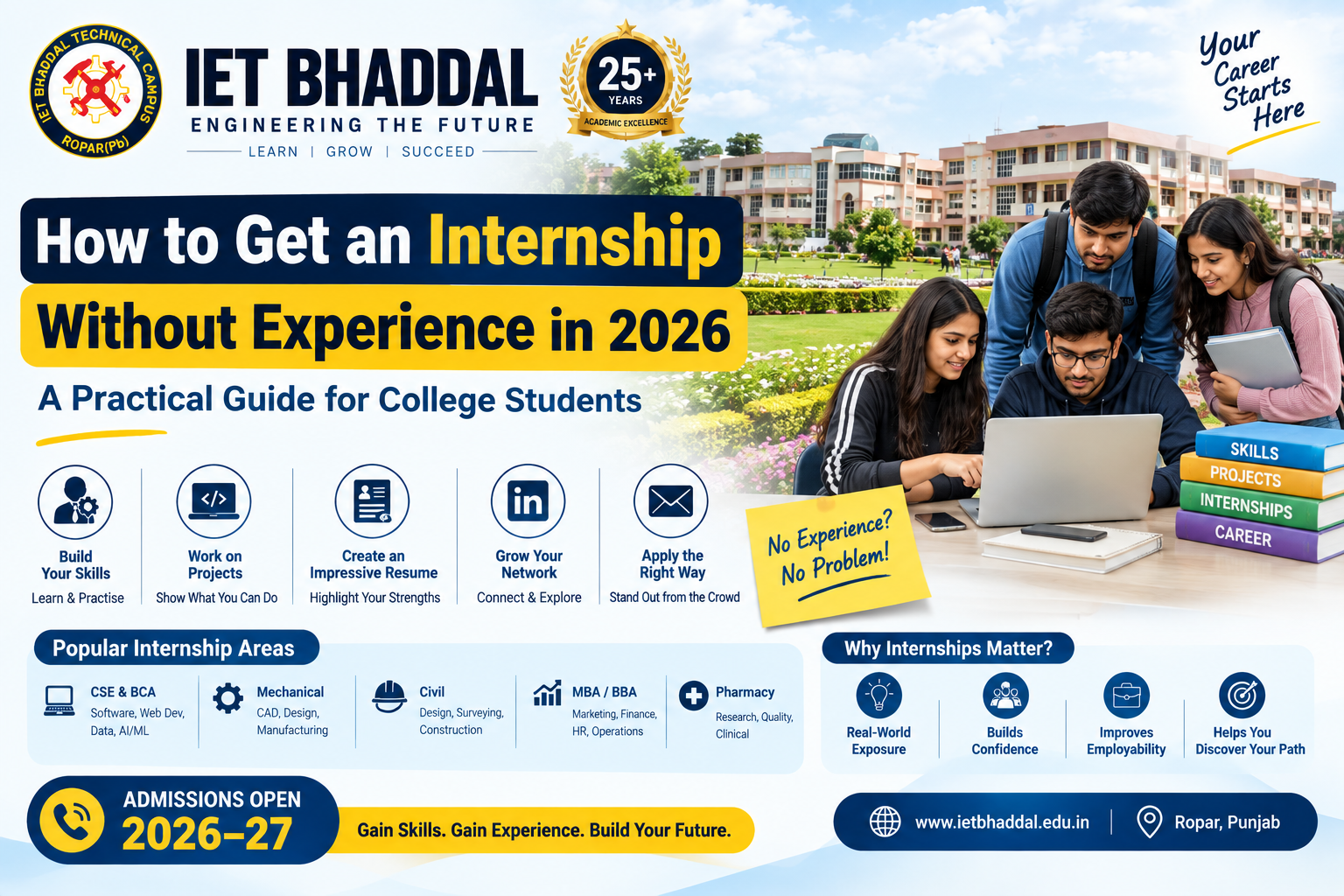
How to Get an Internship Without Experience in 2026
Desc - Don't have experience? Learn how college students can find internships in 2026 using projects, skills, portfolios, networking and targeted applications.
How to Get an Internship Without Experience in 2026: A Practical Guide for College Students
One of the most frustrating situations for college students is seeing an internship listing that says “experience preferred.” Then comes the obvious question: “How am I supposed to get experience if nobody gives me a first opportunity?”
The answer is to stop thinking about experience as only previous employment. For students, experience can also include projects, competitions, hackathons, freelance work, academic assignments, open-source contributions, student organisations and volunteer work.
The goal is to show an employer: “I may be a student, but I can learn and contribute.”
Why Internships Matter
An internship can help students understand workplace expectations, professional communication, deadlines, teamwork and real projects. But don't chase internships only for certificates. A useful internship should help you answer: What did I learn? What did I work on? What problem did I solve?
Step 1: Identify Your Skill
Don't apply randomly. Choose one area. CSE/BCA students can explore web development, programming, data analytics, AI/ML or cybersecurity. Mechanical students can explore CAD, manufacturing, design or automation. Civil students can explore CAD, surveying, construction or project management. Electrical students can explore automation, power systems or electrical design. MBA/BBA students can explore marketing, finance, HR, operations or business analytics.
Step 2: Build One Small Project
You don't need 20 projects. Build one good project. A CSE/BCA student could create a student expense tracker. An MBA student could create a social media marketing analysis. A mechanical student could create a CAD-based machine component. A civil student could create a basic site-planning project. An electrical student could create an energy-monitoring concept.
Step 3: Create a Simple Resume
Your resume doesn't need to be five pages. For a student, one page can be enough. Include education, skills, projects, certifications, internship/volunteer experience, achievements and contact information. Specific statements are stronger than generic claims.
Step 4: Create a LinkedIn Profile
Your LinkedIn profile should clearly communicate who you are, what you're learning and what you're looking for. Example: B.Tech CSE Student | Python & Web Development Learner | Interested in AI & Data | Seeking Software Internship.
Step 5: Build a Portfolio
A portfolio is especially useful for CSE, BCA, MCA, architecture and marketing. Include Project → Problem → Your Solution → Tools → Result.
Step 6: Don't Apply to Only Big Companies
Students often apply to large companies and ignore startups, local businesses, small technology firms, agencies, research organisations, NGOs and manufacturing companies. A smaller internship can still provide meaningful experience.
Step 7: Use College Networks
Speak to faculty, seniors, alumni, placement/career teams, guest speakers and industry contacts. Career counselling, industrial visits, hackathons, workshops and expert sessions can also help students discover opportunities.
Step 8: Apply Properly
Don't send the same message to 100 companies. Write a short, specific message explaining your course, interest, project and what you want to learn.
Step 9: Prepare for Interviews
Expect questions such as: Tell me about yourself. Why do you want this internship? What have you built? What tools do you know? What did you learn from your project? What do you want to learn? Understand your own work rather than memorising answers.
What If You Don't Get an Internship?
Don't stop learning. Use the time to build projects, volunteer, freelance, join competitions, participate in hackathons, contribute to open source or learn industry tools.
Internship Roadmap
First Year: Explore. Second Year: Build. Third Year: Intern. Final Year: Convert experience into career opportunities.
Where Students Can Look for Internships
Use multiple channels rather than relying on a single website. Check the AICTE National Internship Portal, company career pages, startup websites, LinkedIn, faculty recommendations, alumni networks and local businesses. Search by skill as well as by job title. For example, a student interested in web development can search for frontend intern, web development intern and junior developer intern. Broader searches can uncover opportunities that a single keyword misses.
How to Spot a Poor-Quality Internship
Be careful when an organisation focuses more on collecting fees or selling a certificate than on providing actual work and mentorship. Before accepting an internship, ask what your responsibilities will be, who will supervise you, whether you will work on a real project, how long the internship lasts and what skills you are expected to use. Never share sensitive personal information or pay suspicious fees simply because an offer promises a job.
How to Turn a College Project Into Internship Evidence
A college project can become the starting point for an internship portfolio. Document the problem, your approach, tools, challenges and final result. Add screenshots, diagrams or a short demonstration where appropriate. This makes your application more concrete. Employers can then see evidence of how you think and work, even if you have not previously held a formal job.
A Weekly Internship Routine
Treat internship searching like a project. Spend one session improving your resume, one session building or documenting a project, two sessions applying to suitable roles and one session preparing for interviews. Track company name, role, application date, contact, status and follow-up date in a spreadsheet. Consistency is usually more useful than sending a large number of random applications in one day.
A 30-Day Internship Preparation Plan
If you are starting from zero, use the next 30 days to become application-ready. During Week 1, choose one internship direction and review ten job descriptions to identify the most common skills. Do not try to learn every requirement at once. Select one or two skills that match your current academic level.
During Week 2, build or improve one small project. Keep the scope realistic. A completed project is more useful than an ambitious idea that never works. Document the project with a short description, screenshots and the tools you used. If possible, publish the project or create a simple portfolio page.
During Week 3, prepare your resume and professional profile. Ask a faculty member, senior or trusted mentor to review your resume. Correct spelling, remove unsupported claims and make your project descriptions specific. Prepare a short introduction that explains your course, interests, current skills and the type of internship you want.
During Week 4, begin targeted applications. Set a realistic weekly application goal and track every application. Personalise your message when possible. After applying, continue learning rather than waiting for replies. Practise interview questions and be ready to explain your projects in simple language.
If you receive a rejection, treat it as information rather than a final judgement on your ability. Review whether the role required skills you do not yet have, whether your resume communicated your strengths clearly or whether you need more project evidence. Internship preparation is a process. The earlier you begin, the more opportunities you have to improve before graduation.
Quick Reference Table
|
Requirement |
Beginner Action |
|
Resume |
Create one-page resume |
|
|
Complete profile |
|
Project |
Build one meaningful project |
|
Skills |
Choose one core skill |
|
Portfolio |
Document your work |
|
Networking |
Contact faculty/alumni |
|
Applications |
Apply consistently |
|
Interview |
Practise answers |
Frequently Asked Questions
Can I get an internship without experience?
Yes. Students can demonstrate potential through projects, skills, competitions, coursework and portfolios.
What if my resume has no experience?
Highlight education, projects, technical skills, certifications and relevant activities.
Are unpaid internships worth it?
Evaluate what you will actually learn, the quality of mentorship, work involved and credibility of the organisation before accepting.
How can BCA students get internships?
Build programming or web-development projects, create a portfolio and apply to IT companies, startups, agencies and technology teams.
When should engineering students start internships?
Students can begin exploring opportunities early, but building fundamental technical skills first makes internships more productive.
Related IET Bhaddal Articles & Internal Linking
Add the corresponding published URLs as contextual internal links. Use descriptive anchor text instead of generic phrases such as “click here.”
-
BCA After 12th in Punjab 2026–27
-
Top B.Tech Courses After 12th in Punjab 2026–27
-
Your Degree Is Not Enough in 2026
Suggested Closing CTA
Choosing the right academic path is an important decision. Explore the relevant course, understand your options, build practical skills and choose an environment that supports your long-term goals.
Explore programmes and admission information at IET Bhaddal Technical Campus, Ropar, Punjab.
www.ietbhaddal.edu.in
How to Make Your Internship Search More Effective
Set a weekly target that you can maintain. For example, review relevant openings, send a smaller number of carefully matched applications, improve one part of your portfolio and practise one interview question every week. This creates momentum without turning the search into a full-time activity. Keep your application tracker updated so you know which roles you have already contacted and when a follow-up may be appropriate.
Also pay attention to the language used in internship descriptions. If several listings repeatedly mention a particular tool, programming language, communication ability or analytical skill, treat that as a signal about what employers value. You can then prioritise learning that skill and demonstrate it through a project. This is a more strategic approach than trying to learn every new technology simply because it appears on social media.